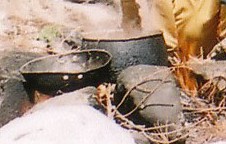
Knowing how to start a campfire in the wild is very useful especially in times of emergency where you need to attract attention without expending precious fuel. Of course, a campfire is also good for keeping away mosquitoes and wildlife, keeping warm, drying clothes and gears and a place for everybody to gather around. To start, maintain and extinguish a fire is dependent on three elements, fuel, oxygen and heat.
Materials
If you are starting a fire using only fuel from the wild, you will need to collect, tinder, kindling and fuel wood.
Tinder is the "fire starters" which are materials that are easily combustible. Look for dry grasses, wood shavings or crush dry leaves into small pieces. They have to be really dry to catch fire. Prepare at least a fist full of this material and more in case the first attempt fails.
Kindling are the fuel for generating sufficient heat to burn the fuel wood. These are mainly twigs, branches and barks. Gather different sizes of kindling ranging from 1 mm to about 20 mm in diameter. Smaller kindling are easier to catch fire but does not burn for long. Larger kindling takes a longer time to catch fire but are able to generate more heat. Have about three to five hands-full of them. These need to be sufficient to sustain the fire until the fuel wood catches fire. For a small campfire, you may still need kindling to keep the fire going even when the fuel wood is burning.
Note that tinder and kindling need to be very dry to successfully start a fire. Twigs for kindling should snap instead of bend when you are breaking it.
Fuel woods are the main fuel for sustaining the fire over a few hours. These should not be larger than the diameter of your forearm. Most small campfires do not need for than two or three pieces.
Preparation
Identify a safe spot or clear an area for starting the fire. This place should be free of dry leaves and other combustible material with a good margin from the fire. You will need to decide on the structure of the campfire. The construction of the fire depends on its purpose such as cooking, general purpose or as a gathering point. Below are a few examples,
Trench fire
|
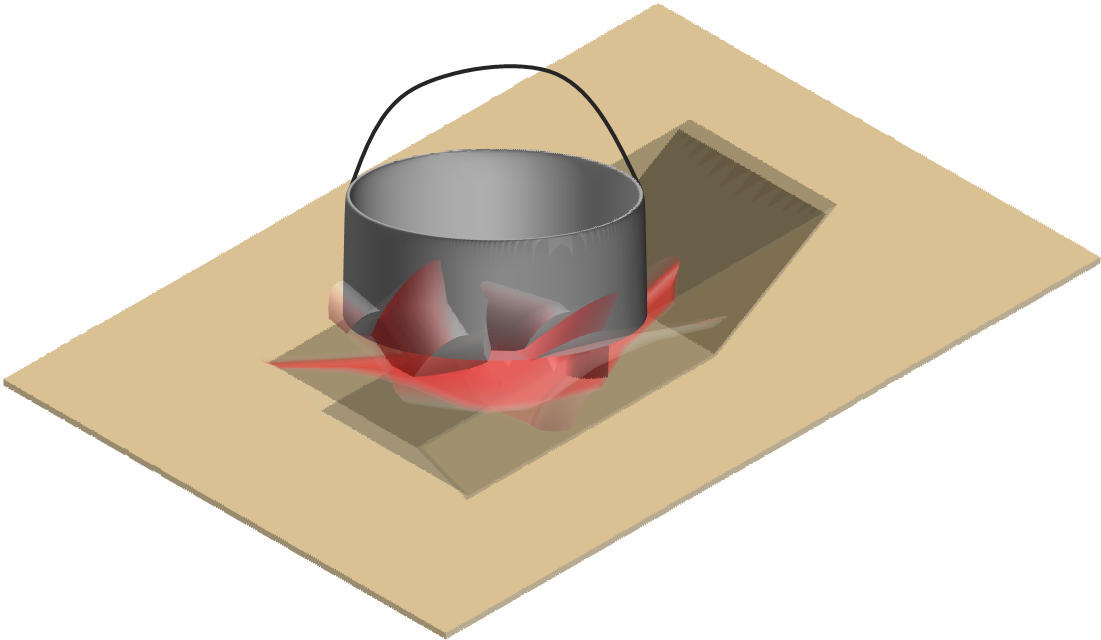
The trench fire is one of the best fire setups for cooking. It is also a fire that is safe to construct when there are dry leaves and grasses around the surface. The basic structure is a rectangular hole in the ground where you build the fire. Generally, there is a steeper slope at one end and a gentler slope at the other end for the wind to blow into. First dig a hole in the ground with its length facing the wind direction. When there is a breeze, it will help to keep the fire going. The width of the trench should be large enough to start a fire but small enough to put your pot over it without dropping into the hole. You may wish to taper the trench with a wider width near the mouth and a narrower width near the other end so that different pot sizes can be used on it. The depth of the hole should be about half your forearm.
| Step 1. Dig a rectangular hole in the ground with its length in the direction of the wind. |
|
|
| Step 2. Place some tinder inside the trench and lay the kindling across the width of the trench in a crisscross manner. The smallest kindling should be at the bottom and the larger pieces on top. Place some tinder near the mouth of the trench. When you are ready, light the tinder at the mouth of the trench and use a stick to push it in. This will cause the kindling to catch fire and fall into the trench. |
|

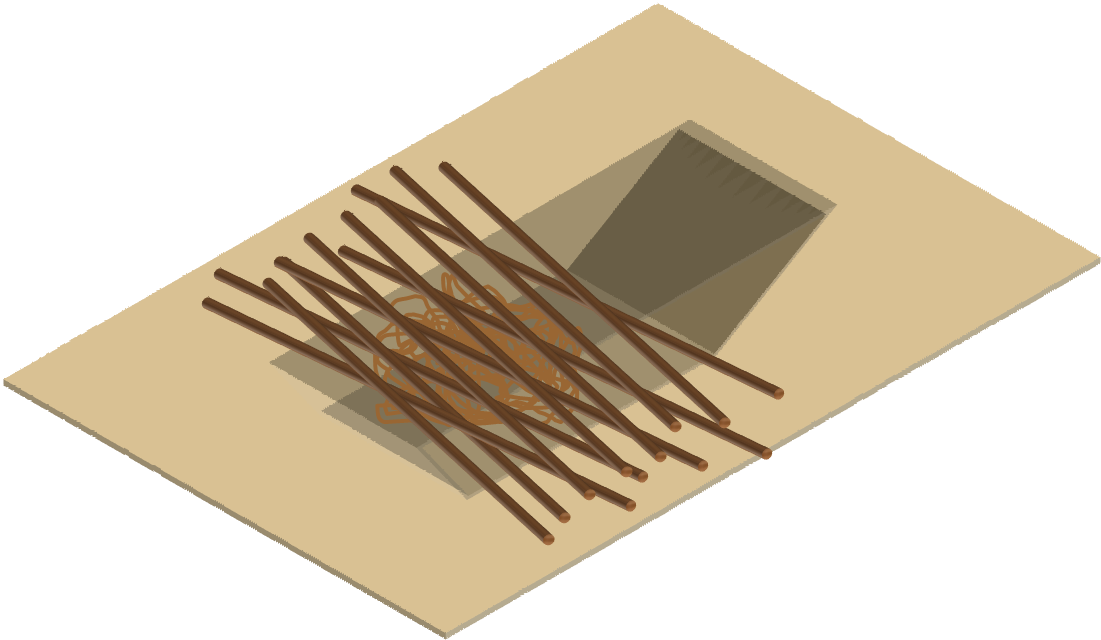
Continue to feed the fire in the trench with kindling or fuel wood. As the walls of the trench traps the heat, this help to keep the fire burning and concentrate the heat towards the base of the pot. Putting out the fire is also a simple matter of spreading the ambers in the trench and covered it with the loose soil that was dug out from the ground. The main drawback of this method is that a shovel is often necessary to dig a hole in the ground. This method is also seldom used when the fire is not meant for cooking.
| Element | Facilitating Condition |
|---|---|
| Heat | Trench traps the heat |
| Oxygen | Breeze blowing along the length of the trench |
| Fuel | Kindling and fuel wood |
Hunter fire and backlog fire
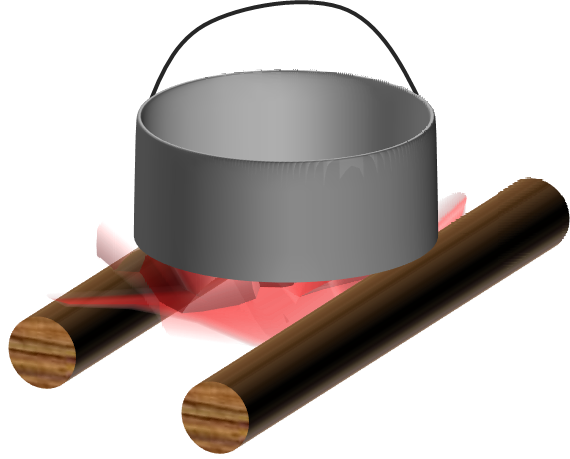
|
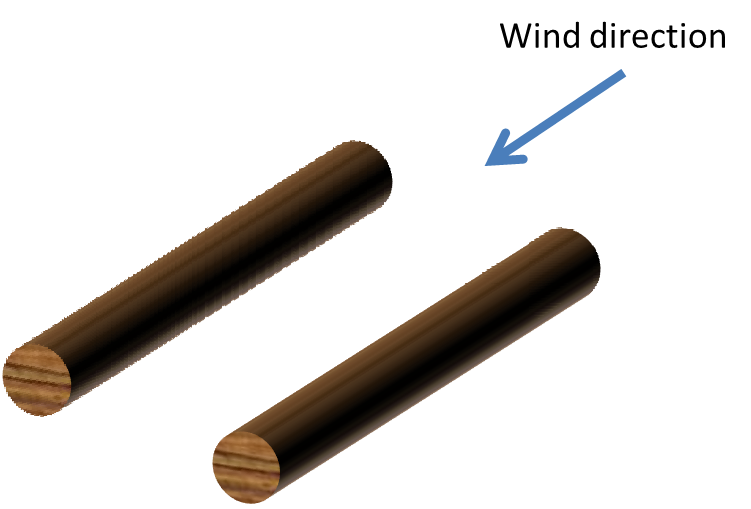
The hunter fire is one of the most commonly used fires in a campsite as it can be used for cooking and as a fireplace. The setup comprises of two logs placed in parallel. A variant of the hunter fire is the backlog fire which uses one log instead of two. The length of the logs should be in parallel with the wind direction.
| Step 1. Place the logs in position. |
|
|
| Step 2. Place the tinder between the logs and the kindling in a crisscross manner above. Lit some tinder at one end of the logs and push the lit tinder under the kindling. The tinder under the kindling will catch fire and start to burn the kindling above. Continue feeding the fire until it is stable. The logs will also function as fuel wood but it should be large enough to support the pot during cooking. |
|
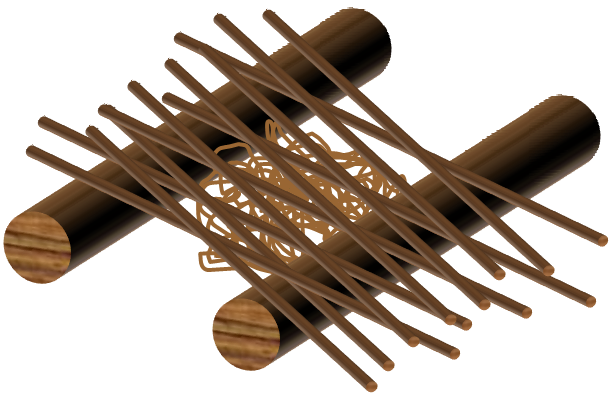
To convert the cooking fire into a fireplace, place fuel wood across the logs and above the fire such that they will catch fire too.
| Element | Facilitating Condition |
|---|---|
| Heat | Logs placed in parallel traps the heat |
| Oxygen | Breeze blowing along the length of the logs |
| Fuel | Kindling and fuel wood |
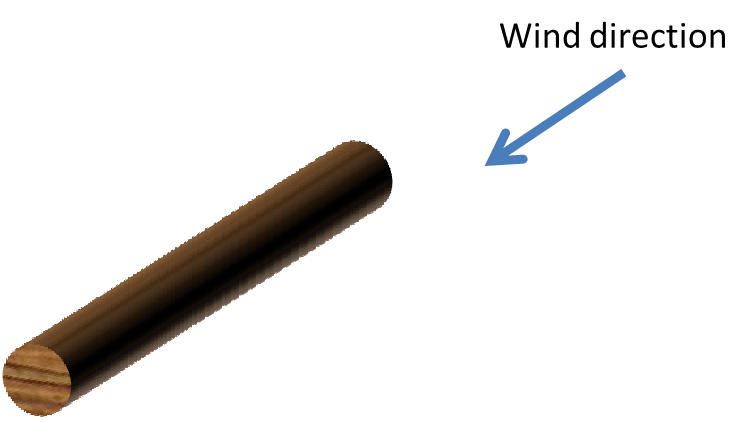
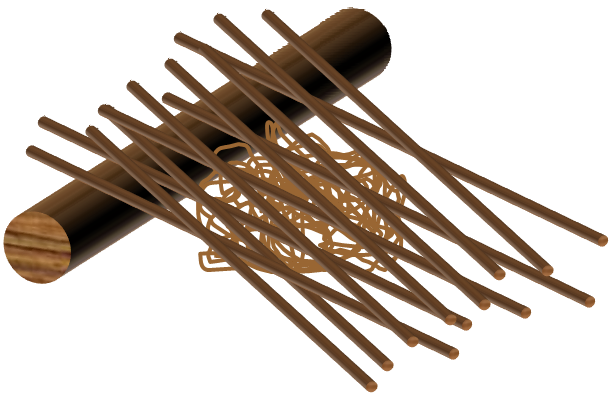
The backlog fire is less suitable for cooking as it did not give support for a pot. However, it is simple to setup as a fireplace.
| Step 1. Place the log in position. |
|
|
| Step 2. Place some tinder close to the log and lean kindling in a crisscross manner against the log. Lit some tinder at the opening and push the lit tinder under the kindling. The tinder under the kindling will catch fire and start to burn the kindling above. Continue feeding the fire until it is stable. To create a continuous fire, lean some fuel wood on the log above the fire. |
|
To convert the cooking fire into a fireplace, place fuel wood across the logs and above the fire such that they will catch fire too.
| Element | Facilitating Condition |
|---|---|
| Heat | Log on one side traps the heat |
| Oxygen | Wind from general direction |
| Fuel | Kindling and fuel wood |